


Mold remediation
Mold can grow fast and affect your health. We find it, remove it, and help keep it from coming back.
Central Texas · We answer 24/7
Mold Remediation, handled.
Mold needs three things: moisture, something to eat and time. Give it a leak and a couple of days and it starts growing behind walls, under floors and in places you can’t see.
We find where it is and why it’s there, contain it so it doesn’t spread, remove it, and fix the moisture so it doesn’t come back.
5:10 Restoration Group is an IICRC Certified Firm; its listing includes Applied Microbial Remediation (AMRT) certification.
Licensed by the Texas Department of Licensing and Regulation (TDLR) as a Mold Remediation Contractor. License #MRC2312.
Before any mold job, Texas requires us to give you TDLR’s Consumer Mold Information Sheet (PDF). It explains how mold remediation works and what your rights are. Read it anytime.
Signs of mold
- A musty smell that won’t go away
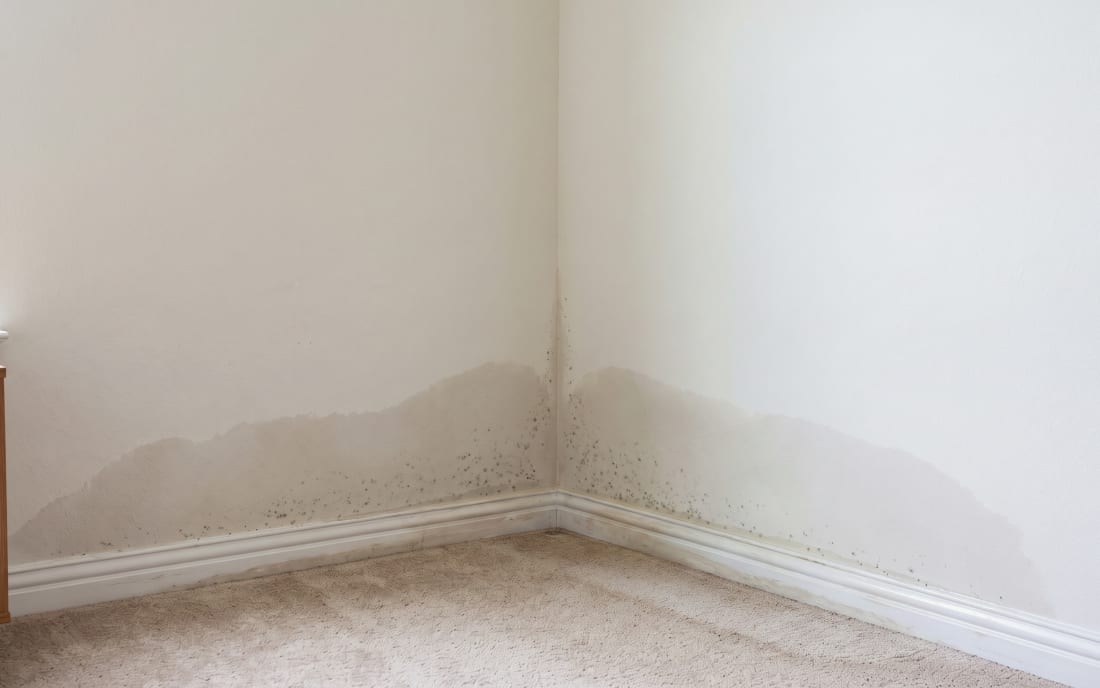
- Spots or staining on walls, ceilings or grout
- Past leaks or water damage that dried on its own
- Peeling paint or warped drywall
- Condensation around windows and AC units
- Allergy-like symptoms that ease when you leave
Mold doesn’t wait.


- Hour 0
Water soaks drywall and flooring.
A burst pipe, a roof leak, a flood or a fire hose. - 24–48 hours
Mold can begin to grow.
On wet materials that haven’t been dried. Source: EPA - Days later
It can spread inside walls, out of sight.
Into drywall, carpet pad and wood framing.
Water soaks drywall and flooring.
It can spread inside walls, out of sight.
Call within the first 24 hours: (254) 325-2100
Mold you can see is rarely all of it.
Mold grows where moisture stays: the back of drywall, under carpet pad, inside wall cavities and along wood framing. That’s why the moisture gets traced before anything comes out.

Signs you may have a mold problem
- A musty smell that won’t go away
- Visible spots or staining on walls, ceilings or grout
- Past leaks or flooding that dried on their own
- Peeling paint or warped drywall
- Condensation and high humidity around windows and AC
- Allergy-like symptoms that ease when you leave the house

Who’s most at risk
Common reactions
For people who are sensitive to mold, exposure can lead to a stuffy nose, wheezing, and red or itchy eyes or skin.
Source: CDC
Who’s most at risk
People with asthma or mold allergies may have more severe reactions. People with weakened immune systems or chronic lung disease may get lung infections from mold.
Source: CDC
What not to do
- Don’t just bleach itThe EPA doesn’t recommend bleach or other biocides as a routine part of mold cleanup. Porous materials like drywall, ceiling tiles and carpet may have to be removed, and the moisture still has to be fixed. Source: EPA
- Don’t run the HVAC over itDon’t run the heating and air if you know or suspect it’s contaminated with mold: it can carry spores through the house. Source: EPA
- Don’t scrape, sand or scrub dry moldDisturbing mold sends spores into the air. Leave it alone until the area is contained.
- Fix the moisture firstMold comes back where water stays. Stop the leak and dry the area, or the cleanup won’t last. Source: EPA
In Texas, mold remediation is licensed by TDLR. When mold affects 25 contiguous square feet or more, licensed professionals have to do the work. Source: Texas rule 16 TAC §78.30
Many policies expect prompt action to limit damage. Check your policy.
What’s included
Finding the Source
We trace the moisture behind the mold and check how far it reached, because mold you can see is rarely all of it. For larger jobs, Texas requires a separate licensed mold assessor to write the plan, and we’ll explain how that works.
Containment
The work area is sealed off with barriers and negative air pressure so spores don’t travel to the rest of the building.
Mold Removal
Contaminated materials are removed and the remaining surfaces are cleaned, with the air filtered through HEPA equipment.
Prevention
The moisture problem that started it is found and dried out, so the mold has nothing to come back to.
24/7 emergency response
Think you have mold?
- Don’t scrub or spray it. Disturbing mold sends spores into the air.
- Don’t run fans toward it.
- Fix or stop the water source if you know it.
- Keep people with asthma, allergies or weak immune systems away from the area.
- Call us and tell us what you’re seeing.
From the first call to done.
- 01
Call
Tell us what you’re seeing or smelling and where. We answer 24/7.
- 02
Find the source
We locate the moisture behind the mold and how far it spread.
- 03
Contain & remove
Barriers and negative air go up, contaminated materials come out, the air is filtered.
- 04
Prevent
The moisture problem is dried and corrected so the mold doesn’t come back.
How Texas handles mold
Texas licenses mold work through the Department of Licensing and Regulation (TDLR). For mold covering 25 contiguous square feet or more, a licensed mold assessment consultant writes the plan and a licensed remediation contractor carries it out. Ask us how that applies to your job.
Where We Work
Serving Central Texas & surrounding areas.
From our Salado base, up and down I-35, day or night.
Common questions, answered.
Is all mold dangerous?
Can I just bleach it?
Will it come back?
What’s the difference between a mold assessment and mold remediation in Texas?
How fast does mold grow after a leak?
Do you handle commercial buildings?
More services
All services


Get it handled.
Call any time, day or night. Or send a request and we’ll get back to you.
- Phone · 24/7(254) 325-2100
- Facebook5:10 Restoration
- Based inSalado, Texas · serving Central Texas

24/7 help across Central Texas.
Water, fire, smoke or mold. One call starts the cleanup.